Objects made for daily use
The guide describes baskets for carrying and storage, trays for winnowing, mats, rain shields and wooden vessels. These are not merely decorative heritage objects: their shapes answer tasks such as moving grain, sorting a harvest, keeping rain off a worker or managing milk. The availability of bamboo, timber, wool and nettle fibre varies by place. Craft production is therefore linked to the village’s surrounding resources and to exchange with other settlements.
The backstrap loom
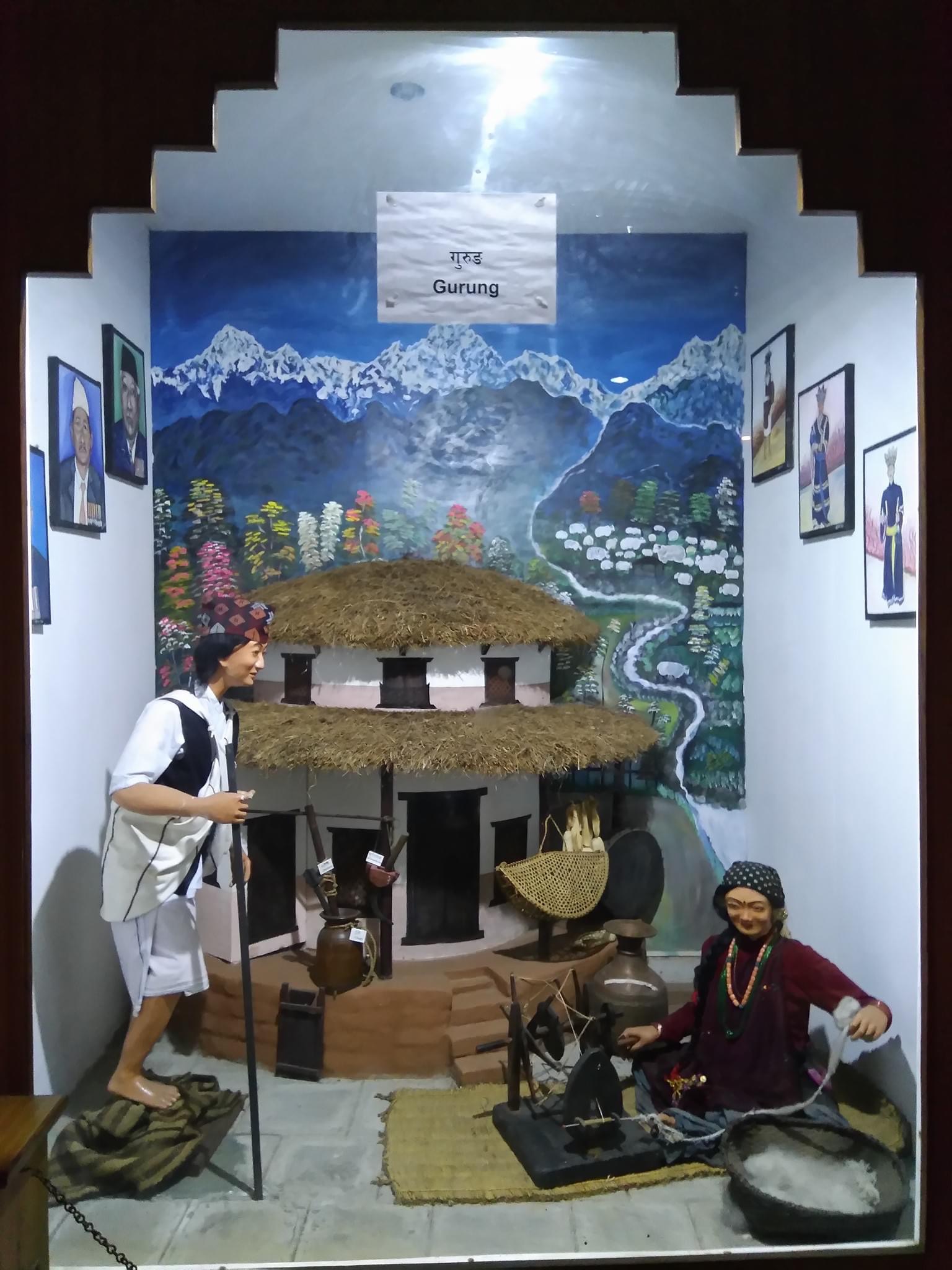
Macfarlane and Indrabahadur Gurung describe a loom whose warp tension is controlled through the weaver’s body, commonly called a backstrap loom. Harrison and Macfarlane’s notes accompany a 1993 film of spinning and weaving and describe older women carrying out the work especially in winter. The body is part of the tool’s operation: maintaining tension and moving the threads are learned skills. The recorded division of labour is historical evidence, not a rule about who is allowed to weave now.
Nettle fibre takes work
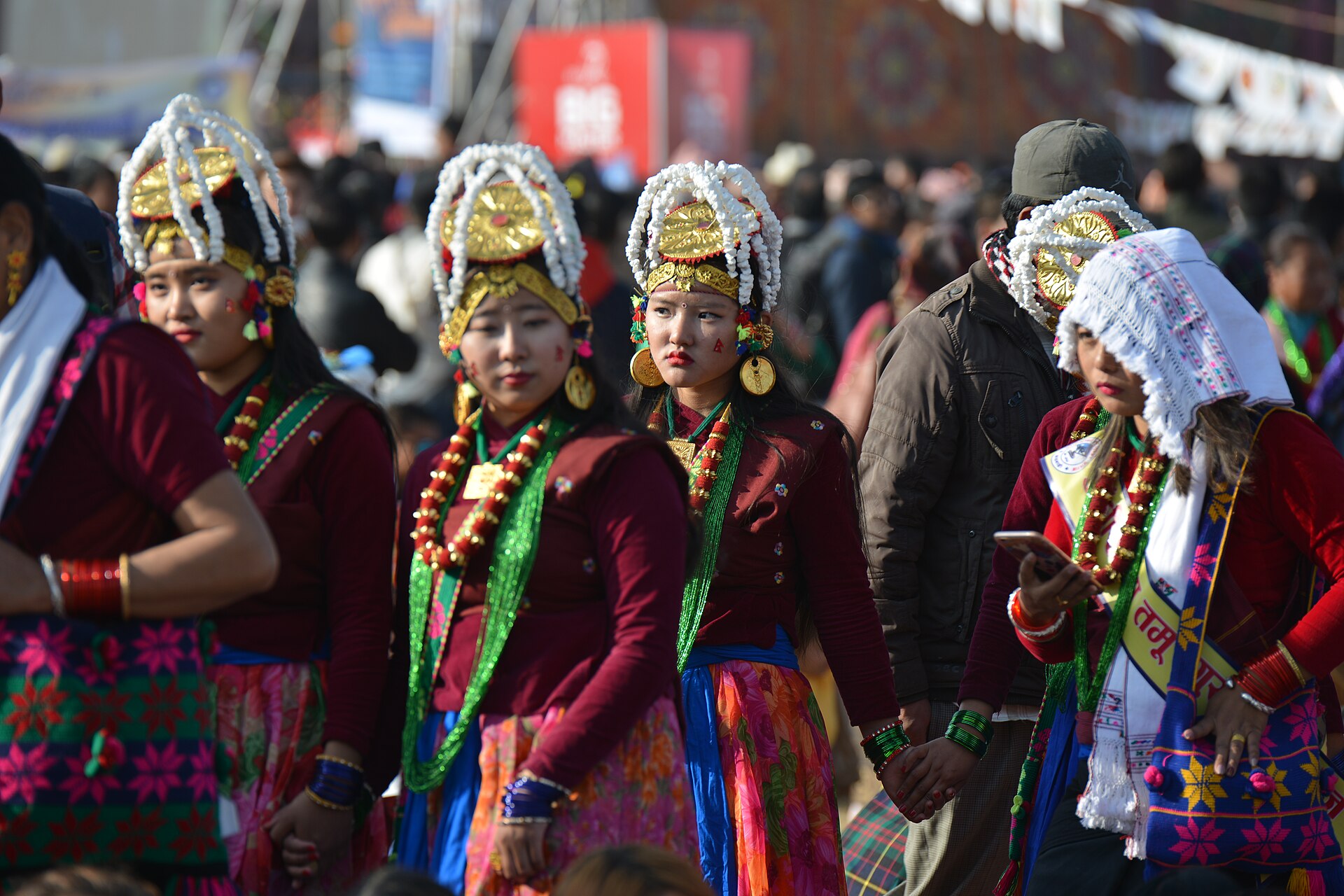
The guide describes nettle being washed, beaten and spun before weaving; Harrison and Macfarlane’s notes emphasise the difficulty of processing prickly plants collected in high forest. The resulting thread can make durable cloth for carrying garments and sacks. Calling such fabric “natural” can conceal the labour and discomfort involved in producing it. A bhangra seen at a present-day celebration may use purchased fabric rather than hand-processed nettle, so material should be identified rather than assumed from appearance.
Wool and changes in supply
Sheep wool was used for sturdy capes and rugs in the guide’s account, alongside later supplies of imported wool and cotton. Purchased cloth and manufactured containers also changed the demand for household production. These changes do not mean that every craft vanished at the same time. They show that an object’s cultural meaning and its materials can change separately: a familiar form may remain while the source of its fibre or the place of manufacture changes.
Recording a craft accurately
A meaningful craft record identifies the maker, material, tools, village, date and purpose of the object. It can also document how a technique was learned and whether it is still practised. The films referenced in The World of the Gurungs provide dated examples rather than generic demonstrations. This article describes those examples without offering an improvised nettle-processing tutorial or treating every woven item as a uniquely Gurung invention.
Sources & further reading
1A Guide to the Gurungs (online draft; differs from published edition)
Ethnographic guide · Page-level claim citations not yet suppliedThe World of the Gurungs
Longitudinal ethnographic book and film notes · Page-level claim citations not yet suppliedHeritage grows through conversation.
Know a different local account, or spotted something that needs correcting?
Share your knowledge