यो निबन्धको पूर्ण पाठ अनुवाद तयार हुँदासम्म अङ्ग्रेजीमा छ। अङ्ग्रेजी पाठ पढ्नुहोस्
Food follows the fields
The guide describes rice, maize and millet as major grains of Gurung hill agriculture, with lentils, beans and vegetables alongside them. Rice dishes and millet preparations belong to a wider Nepali food landscape as well as particular Gurung households. A useful account of Tamu food therefore asks who prepares a dish, where its ingredients come from and on what occasion it is eaten, rather than declaring all foods in a Gurung kitchen uniquely ethnic. What a family eats also varies with altitude, harvest, income and access to markets.
Greens, pulses and preservation
Harrison and Macfarlane describe vegetables and pulses grown in gardens, between main crops and on field embankments. Macfarlane and Indrabahadur Gurung’s account of diet includes vegetables and preserved foods, while its house description notes drying and smoking above the hearth. Preservation lets a harvest or a slaughter supply food beyond the day it is gathered. These methods connect cuisine with seasonal labour and storage space; they are not evidence that all households prepare or consume the same quantities.
The hearth as a household centre
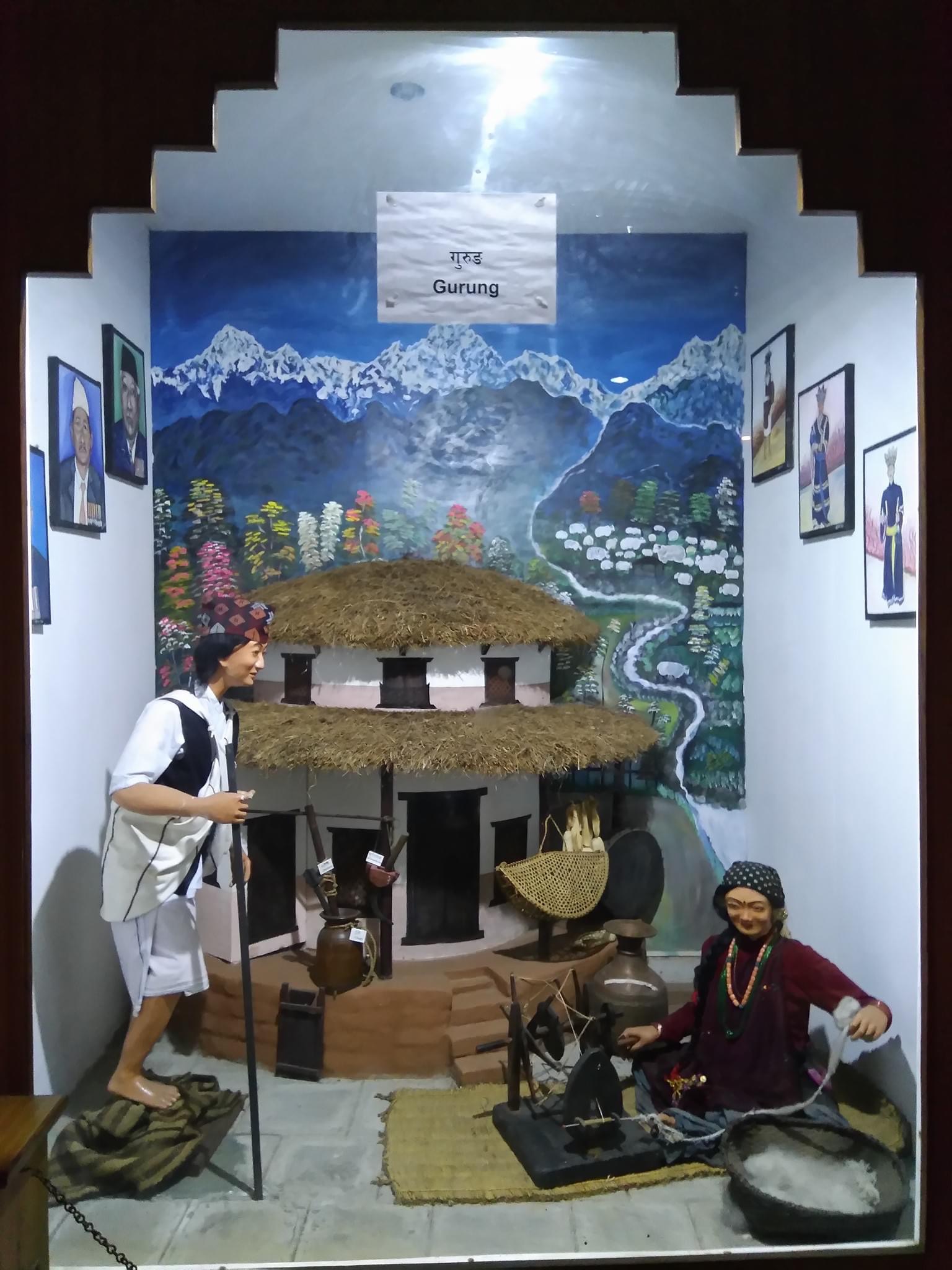
In the guide’s village-house description, cooking takes place around a wood fire, with a rack above it for drying food and storing some implements. Pots, grain baskets and vessels for water and drink occupy nearby space. Meals are therefore part of the house’s organisation rather than an isolated activity. Keeping a fire supplied, bringing water and preparing grain are substantial forms of work. The historical arrangement should not be taken as a requirement for contemporary Gurung homes with different kitchens and fuels.
Hospitality and ceremonial gatherings
The guide describes guests receiving food and drink and notes ceremonial exchanges in marriage and memorial occasions. Shared meals bring relatives and neighbours into the work of a gathering as well as its enjoyment. Alcoholic grain drinks appear in the historical accounts, but personal preference, religion, age and family practice differ. No one food or drink can serve as a test of authentic Tamu identity. Festival menus abroad may combine remembered village dishes with ingredients available locally.
Learning from cooks and speakers
ELA’s public Gurung recording catalogue includes a potato-curry recording, showing how ordinary food knowledge can also support language documentation. A cooking account can preserve names for ingredients, tools, textures and family habits that a formal dictionary misses. This archive has not invented a traditional recipe or assigned unverified Gurung translations to ingredients. A detailed recipe contribution would benefit from a named cook, village or family context, ingredient quantities and permission to publish the account.
स्रोत र थप पठन
1A Guide to the Gurungs (online draft; differs from published edition)
Ethnographic guide · पृष्ठ-स्तरका दाबीका सन्दर्भ अझै दिइएका छैनन्The World of the Gurungs
Longitudinal ethnographic book and film notes · पृष्ठ-स्तरका दाबीका सन्दर्भ अझै दिइएका छैनन्Gurung: background, dialect research and documentation in New York
Language documentation organisation · पृष्ठ-स्तरका दाबीका सन्दर्भ अझै दिइएका छैनन्सम्पदा संवादबाट बढ्छ।
फरक स्थानीय विवरण थाहा छ, वा सुधार्नुपर्ने कुरा भेट्नुभयो?
आफ्नो ज्ञान साझा गर्नुहोस्