यो निबन्धको पूर्ण पाठ अनुवाद तयार हुँदासम्म अङ्ग्रेजीमा छ। अङ्ग्रेजी पाठ पढ्नुहोस्
Clothing, occasion and local variation
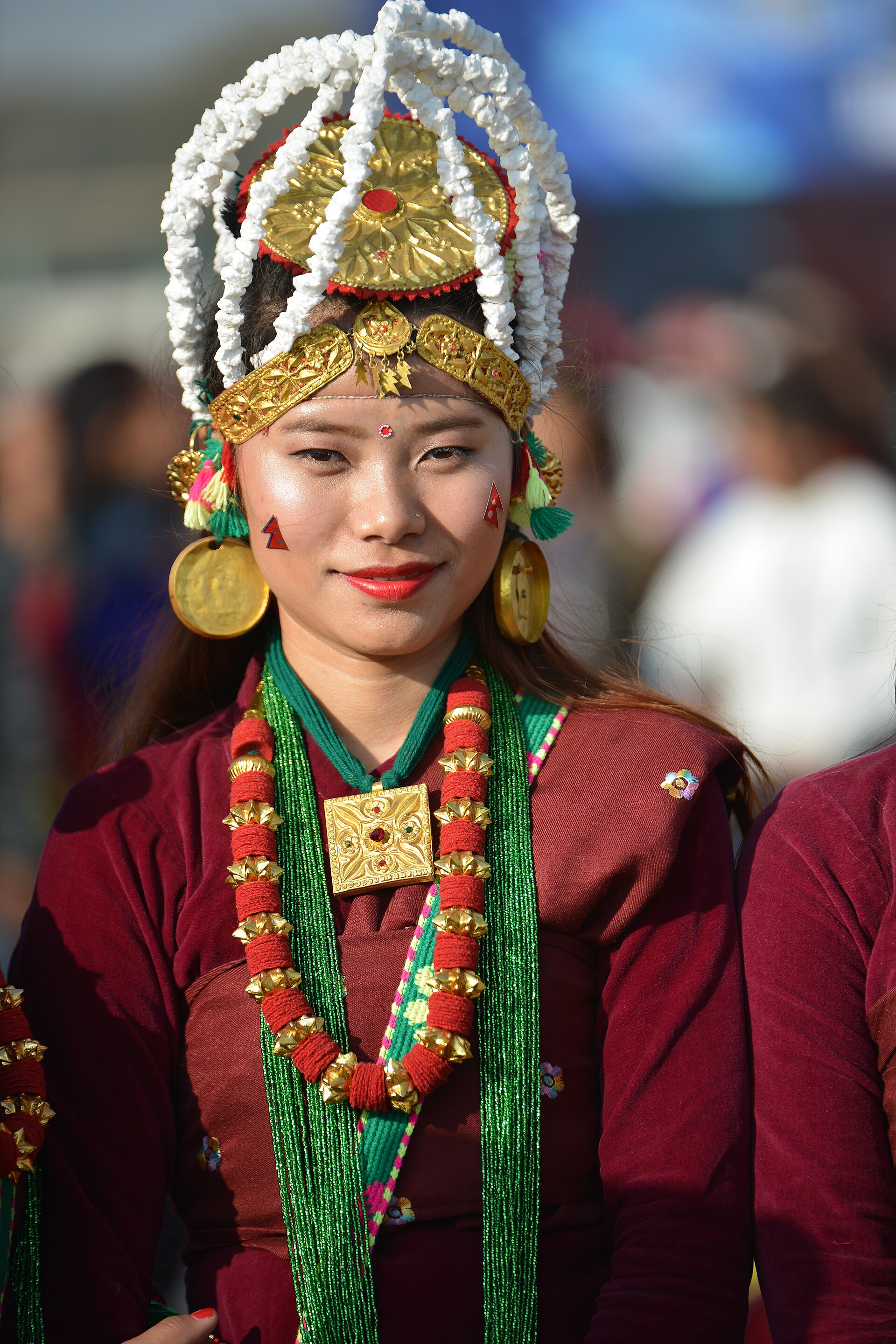
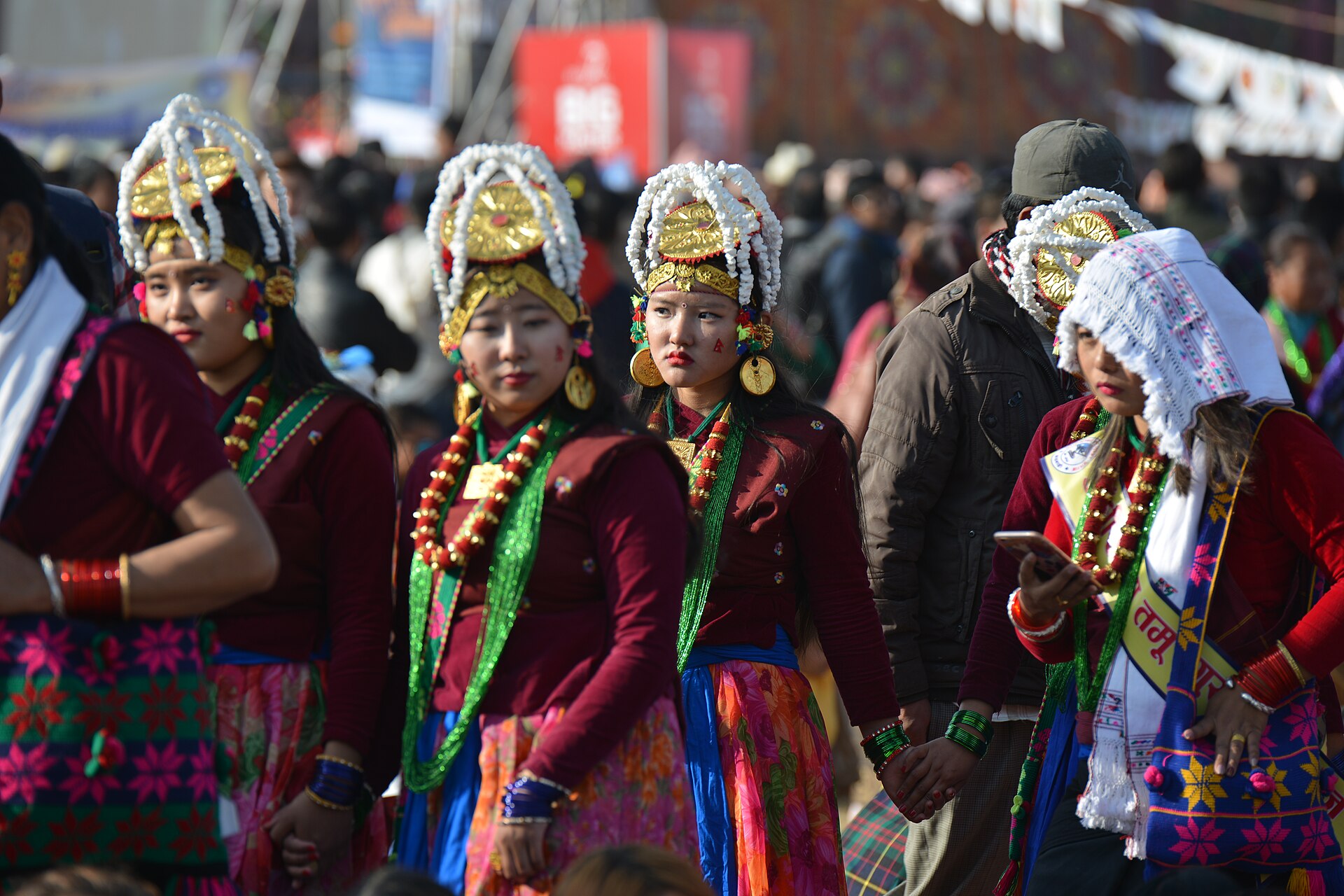
Gurung dress is recognised at Lhosar, weddings and performances, but a festival outfit is not a single uniform worn by all Tamu people. The older guide records substantial change in fabrics and everyday clothing, while the Los Angeles Gurung (Tamu) Society presents a community description of ceremonial dress. These sources have different purposes and periods. Local names, colours, available cloth and family preferences vary, so a present-day outfit should not be treated as an exact replica of one historical description.
Women’s garments and jewellery
The guide describes a layered skirt, a high-necked velvet blouse, a waist wrapping, a velvet cloth over the shoulder and a head cloth. It distinguishes a wider pleated traditional skirt from purchased lungi cloth. It also mentions gold ornaments and turquoise or other semi-precious necklaces associated with trade and town markets. Garment names need care: ghalek or ghalek-type terms should not be assumed to mean the blouse in every account; they can refer to a shoulder wrapping. This article therefore identifies clothing by its function where terminology needs local verification.
The bhangra and men’s clothing
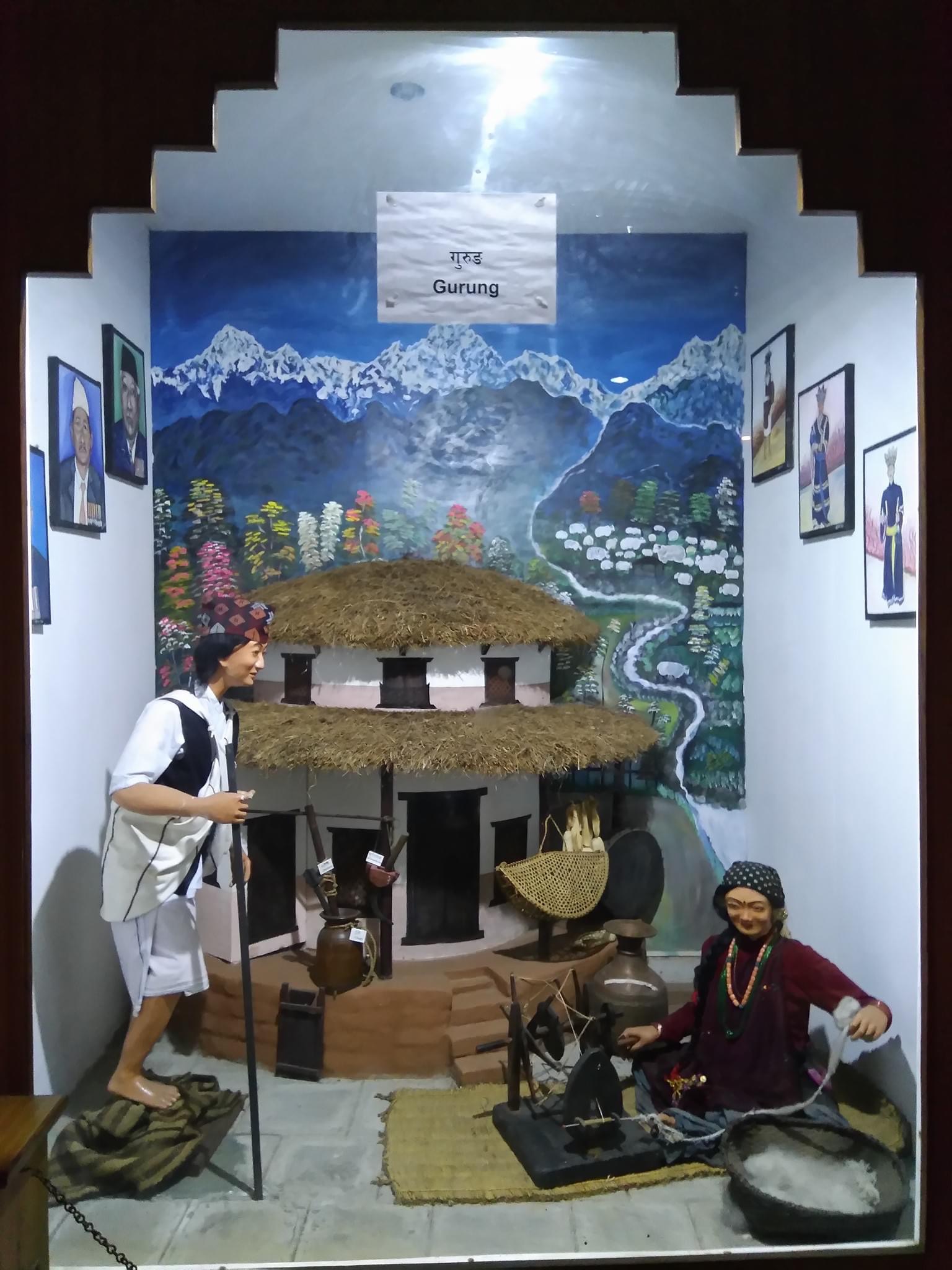
The bhangra is the distinctive carrying cloth or back-sack arrangement crossing the chest and worn open at the back. Older descriptions connect carrying garments with woven nettle fibre, alongside a waist wrap, shirt and Nepali cap. Contemporary ceremonial bhangra may use white purchased fabric. Its practical role matters: a familiar festival form grew from carrying needs, not simply decoration. A khukuri or cap shown in an outfit is not proof of military service or an object every Gurung man must wear.
Materials tell another history
Harrison and Macfarlane document backstrap weaving and processing nettle fibre, while the guide discusses local wool and later imported cotton and wool. Some household textiles were made locally and others bought from bazaars. As materials changed, familiar garment forms could remain meaningful. Without examining the fibre or knowing the maker, a photograph cannot establish whether an item is handwoven nettle, wool, cotton or a modern substitute.
Dress as a living choice
The older accounts include young people wearing changing styles and women combining different garments. This should not be reduced to a story that modern clothing destroys identity. Ceremonial dress can communicate belonging even when everyday life uses other clothes, and inherited jewellery may hold family memories beyond its visual appearance. Any detailed catalogue would need a named owner or maker, region, date, garment term and permission, rather than treating a single photograph as a complete national standard.
स्रोत र थप पठन
1Gurung Traditional Dress
Community organisation · पृष्ठ-स्तरका दाबीका सन्दर्भ अझै दिइएका छैनन्A Guide to the Gurungs (online draft; differs from published edition)
Ethnographic guide · पृष्ठ-स्तरका दाबीका सन्दर्भ अझै दिइएका छैनन्The World of the Gurungs
Longitudinal ethnographic book and film notes · पृष्ठ-स्तरका दाबीका सन्दर्भ अझै दिइएका छैनन्सम्पदा संवादबाट बढ्छ।
फरक स्थानीय विवरण थाहा छ, वा सुधार्नुपर्ने कुरा भेट्नुभयो?
आफ्नो ज्ञान साझा गर्नुहोस्