यो निबन्धको पूर्ण पाठ अनुवाद तयार हुँदासम्म अङ्ग्रेजीमा छ। अङ्ग्रेजी पाठ पढ्नुहोस्
A performance with a social setting
Pirkko Moisala’s research is grounded in a Gurung mountain village and explicitly avoids claiming that all Gurungs share the same cultural practices. Her description of a 1975 performance includes a guru leading male singers, madal drummers and three teenage girl dancers in a crowded household courtyard. People watched, talked, rested and shared food while the performance continued through the night. This makes Ghatu a social event as well as a musical form: the audience, hosts and performers participate in a shared space, not a concert separated from daily life.
Sati and baramase forms
Moisala distinguishes the complete annual performance, called sari or sati Ghatu in different transcriptions, from baramase performances that present selected episodes at weddings, visits and other celebrations. Her account places the full narrative at Baisakh Purnima, around the spring full moon, and links the occasion to divine favour and the rice crop. Harrison and Macfarlane’s notes also describe opening observances near Shree Panchami and the complete performance at Baisakh Purnima. These accounts should be kept locally attributed rather than compressed into one fixed Gregorian date or duration.
A royal story, with local names
In Moisala’s account the narrative concerns King Pashuram, also rendered Pasram, Queen Yamavati and their son. Harrison and Macfarlane record forms such as Parasuram and Yampawoti, while an older account gives Satyawati. The story includes the king’s death and the queen’s immolation, the narrative motif known as sati. Telling or dancing that story is not proof that Gurung communities practised widow immolation or that the characters are independently verified historical rulers. Names and interpretations vary with the performance and its documentation.
Everyday life within the narrative
Moisala describes episodes concerning flowers, rice cultivation, hunting, fishing, marriage, battle and a hermit’s life. In her account the rice-farming episode follows the process from preparing the field and planting to eating the crop. Such sequences connect a royal narrative with recognisable work and relationships. The study treats performance as cultural knowledge: movement and music can communicate ways of understanding a world rather than simply illustrate a text. This is the researcher’s analysis of a particular tradition, not a universal explanation supplied by every performer.
Music, movement and specialist knowledge
The study describes slow rotating movements, bending and rising, overlapping voices and drum patterns that respond to the dancers rather than maintaining a mechanically fixed beat. The guru has a special role in initiating sections and explaining words that other performers may know only approximately. Moisala could not identify the performance language simply as ordinary Gurung or Nepali; other local accounts identify an older Nepali form. This difference is worth retaining. It warns against publishing an invented standard translation based only on a performance’s visual appearance.
Ritual meaning and respectful documentation
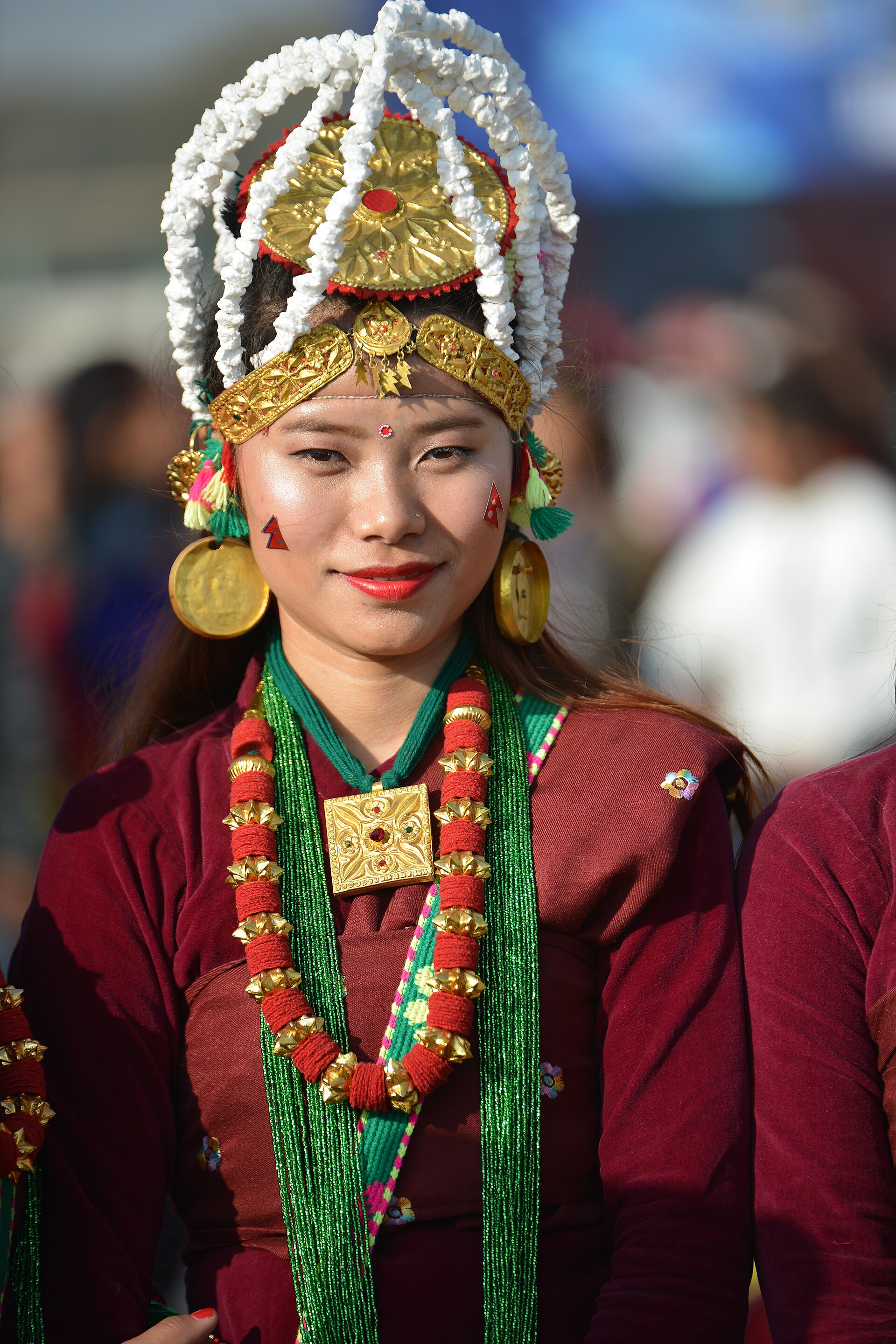
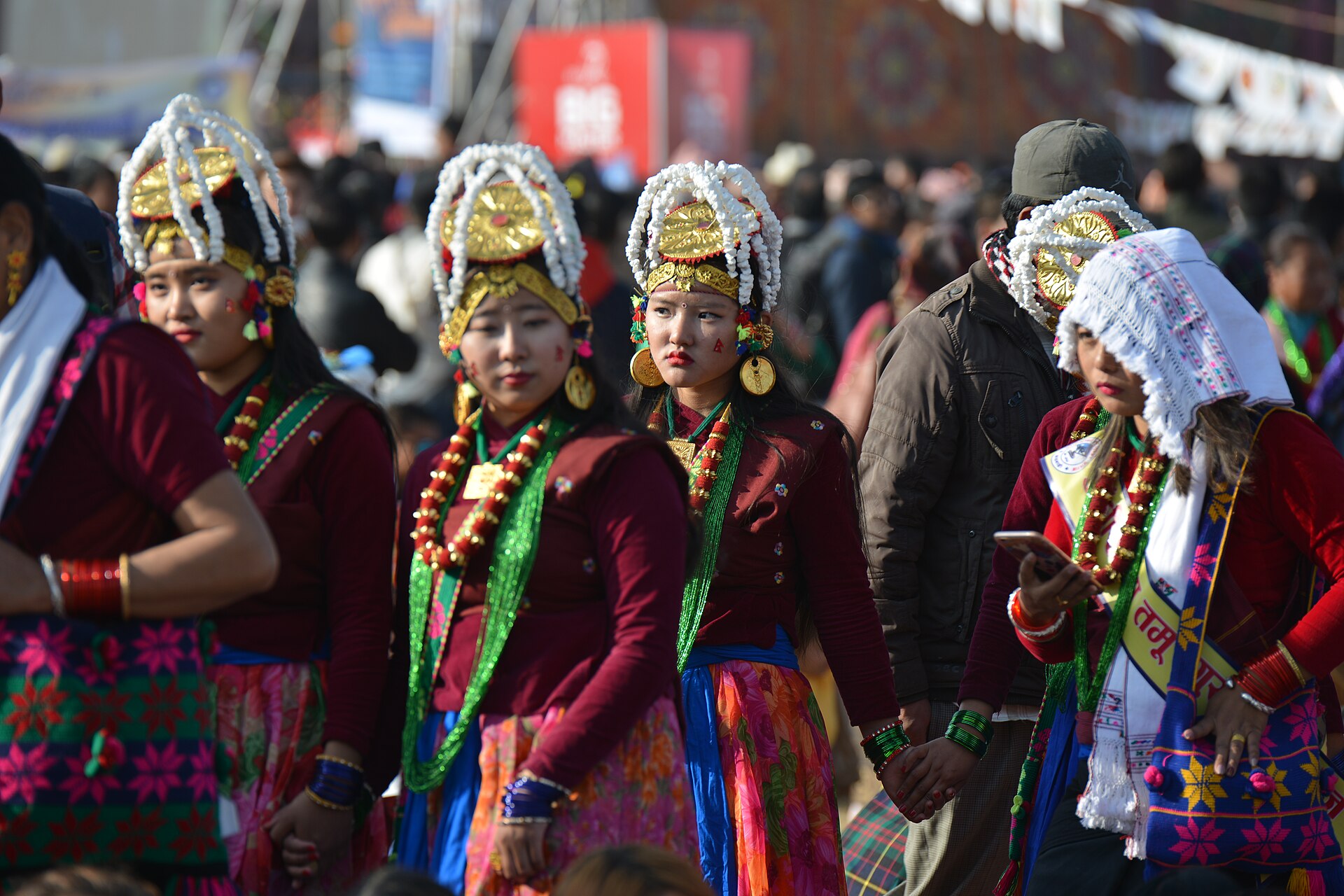
The sources describe divine presence or possession in some performances and important responsibilities for the guru and supporting participants. These are attributed beliefs and observations, not a tutorial for inducing a ritual state. Festival presentations, selected episodes and full village observances are not interchangeable. A permitted recording should identify the performers, place, date and type of performance. The photograph on this page shows Ghatu performers at a Kathmandu Lhosar gathering; it is not evidence of the full annual ceremony described in the research.
स्रोत र थप पठन
1Gurung Cultural Models in the Ghatu Music and Dance
Full-text ethnomusicological research · पृष्ठ-स्तरका दाबीका सन्दर्भ अझै दिइएका छैनन्Gurung Cultural Models in the Ghatu
Peer-reviewed research · pp. 152–176The World of the Gurungs
Longitudinal ethnographic book and film notes · पृष्ठ-स्तरका दाबीका सन्दर्भ अझै दिइएका छैनन्सम्पदा संवादबाट बढ्छ।
फरक स्थानीय विवरण थाहा छ, वा सुधार्नुपर्ने कुरा भेट्नुभयो?
आफ्नो ज्ञान साझा गर्नुहोस्