यो निबन्धको पूर्ण पाठ अनुवाद तयार हुँदासम्म अङ्ग्रेजीमा छ। अङ्ग्रेजी पाठ पढ्नुहोस्
A house is made from its surroundings
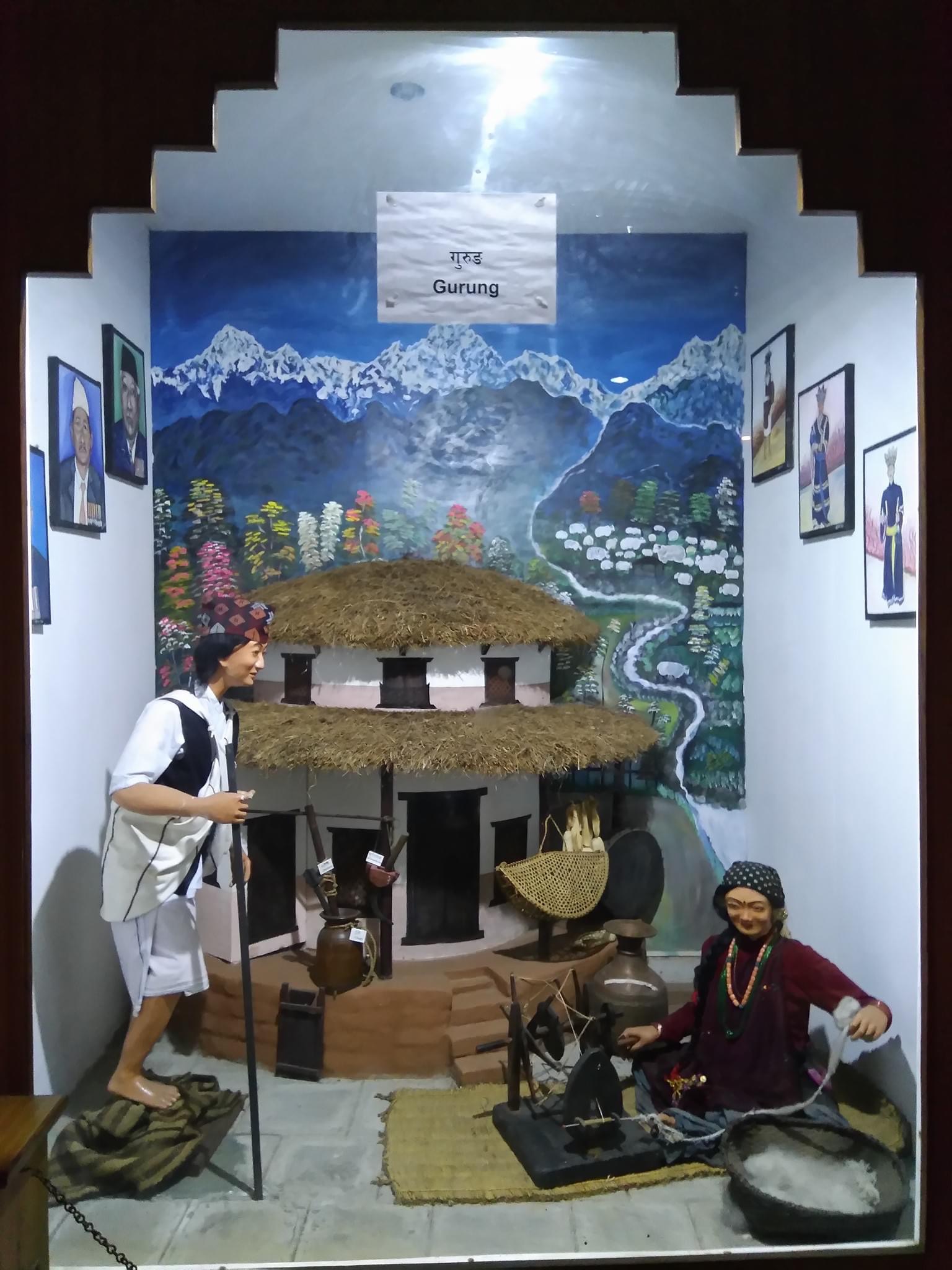
The guide describes village houses built from materials such as stone, timber and earth, while Harrison and Macfarlane’s building notes document stone quarrying and construction work. Access to material, household means and skilled labour shape what is built. The book notes that remittance income also supported substantial houses in some settings. There is therefore no single timeless Gurung house type: the stone façade familiar to visitors is one part of a longer history of materials, rebuilding and investment.
Inside and outside work spaces
The historical guide describes sleeping space downstairs and an upper area used for grain, baskets, mats and tools. Verandas extend domestic activities outside, supporting rest, child care and work. Such arrangements connect a house to farming: crops need storage, implements need accessible places, and wet-season activities need shelter. A dwelling is consequently both a place of family intimacy and an element in the productive household. Current homes may organise these functions very differently.
The hearth and the rack above it
A wood-fire cooking area forms the focal point of the interior in the guide. A suspended rack supports drying or smoking food and keeping some objects above the floor. Shelves hold dishes and vessels, and larger baskets and pots store grain, water and drink. Smoke, heat and storage are intertwined in this description. It is an account of observed domestic arrangements, not a claim that an enclosed smoky kitchen is desirable or that every Gurung household retains it today.
Maintenance is part of architecture
Earthen floors, roofs, firewood supplies and water access require repeated attention. The guide describes routine floor maintenance and the labour of collecting fuel and water. Harrison and Macfarlane record quarrying and the coordination of workers during rebuilding. These tasks make architecture a social process rather than a static object. The knowledge involved includes preparing materials, organising help and keeping the household usable through changing seasons.
Looking beyond picturesque villages
Tourism photographs often foreground stone roofs and mountain views, but the sources also invite attention to storage, sanitation, household labour and changing income. A museum reconstruction can suggest an interior arrangement, yet it cannot replace a dated account from a particular home. This archive identifies reconstructed imagery accordingly. Architectural heritage is strongest when it records the builders, household and circumstances of change, rather than requiring a living village to remain visually unchanged for visitors.
स्रोत र थप पठन
1A Guide to the Gurungs (online draft; differs from published edition)
Ethnographic guide · पृष्ठ-स्तरका दाबीका सन्दर्भ अझै दिइएका छैनन्The World of the Gurungs
Longitudinal ethnographic book and film notes · पृष्ठ-स्तरका दाबीका सन्दर्भ अझै दिइएका छैनन्सम्पदा संवादबाट बढ्छ।
फरक स्थानीय विवरण थाहा छ, वा सुधार्नुपर्ने कुरा भेट्नुभयो?
आफ्नो ज्ञान साझा गर्नुहोस्