यो निबन्धको पूर्ण पाठ अनुवाद तयार हुँदासम्म अङ्ग्रेजीमा छ। अङ्ग्रेजी पाठ पढ्नुहोस्
Making fields on a slope
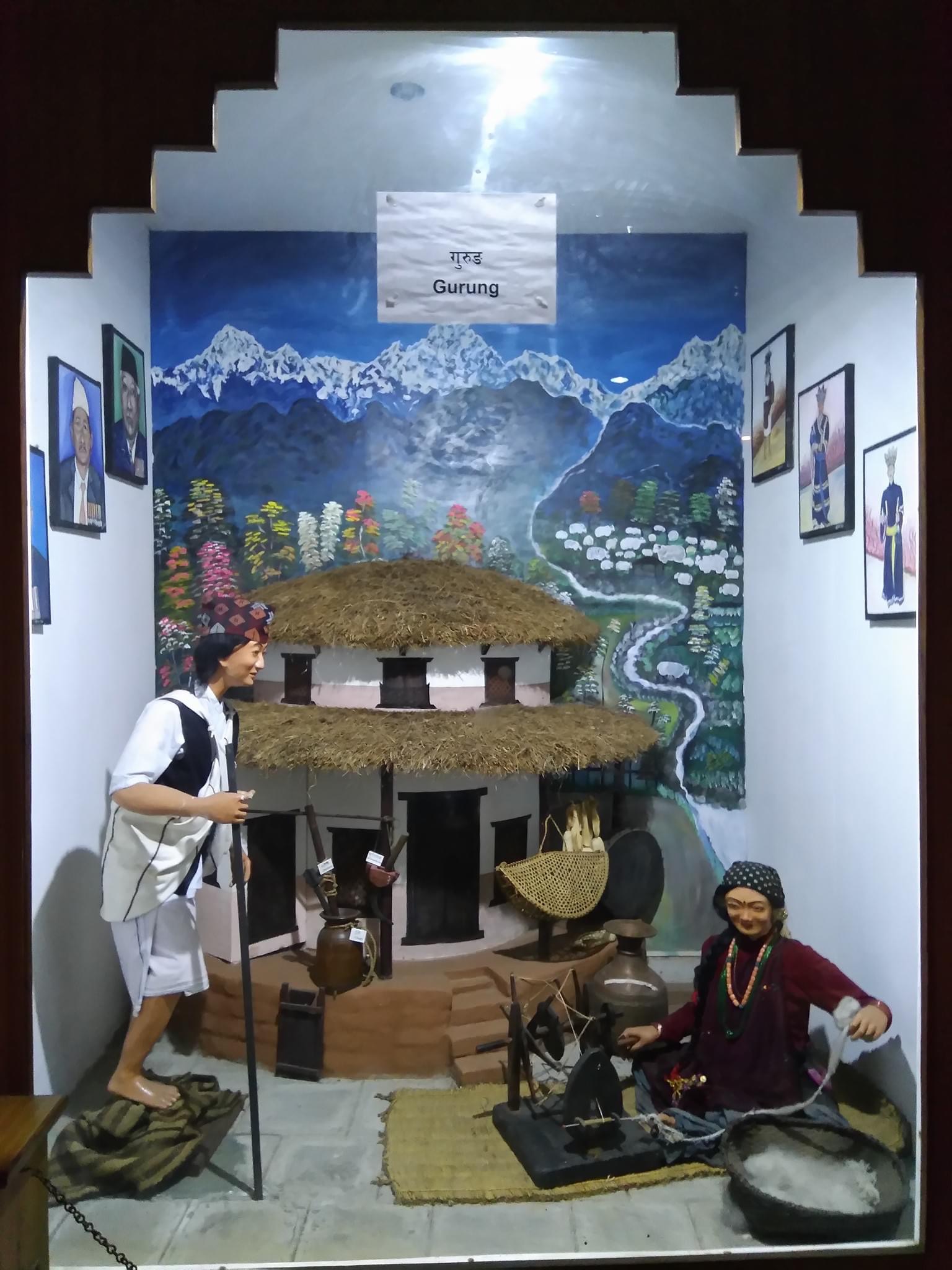
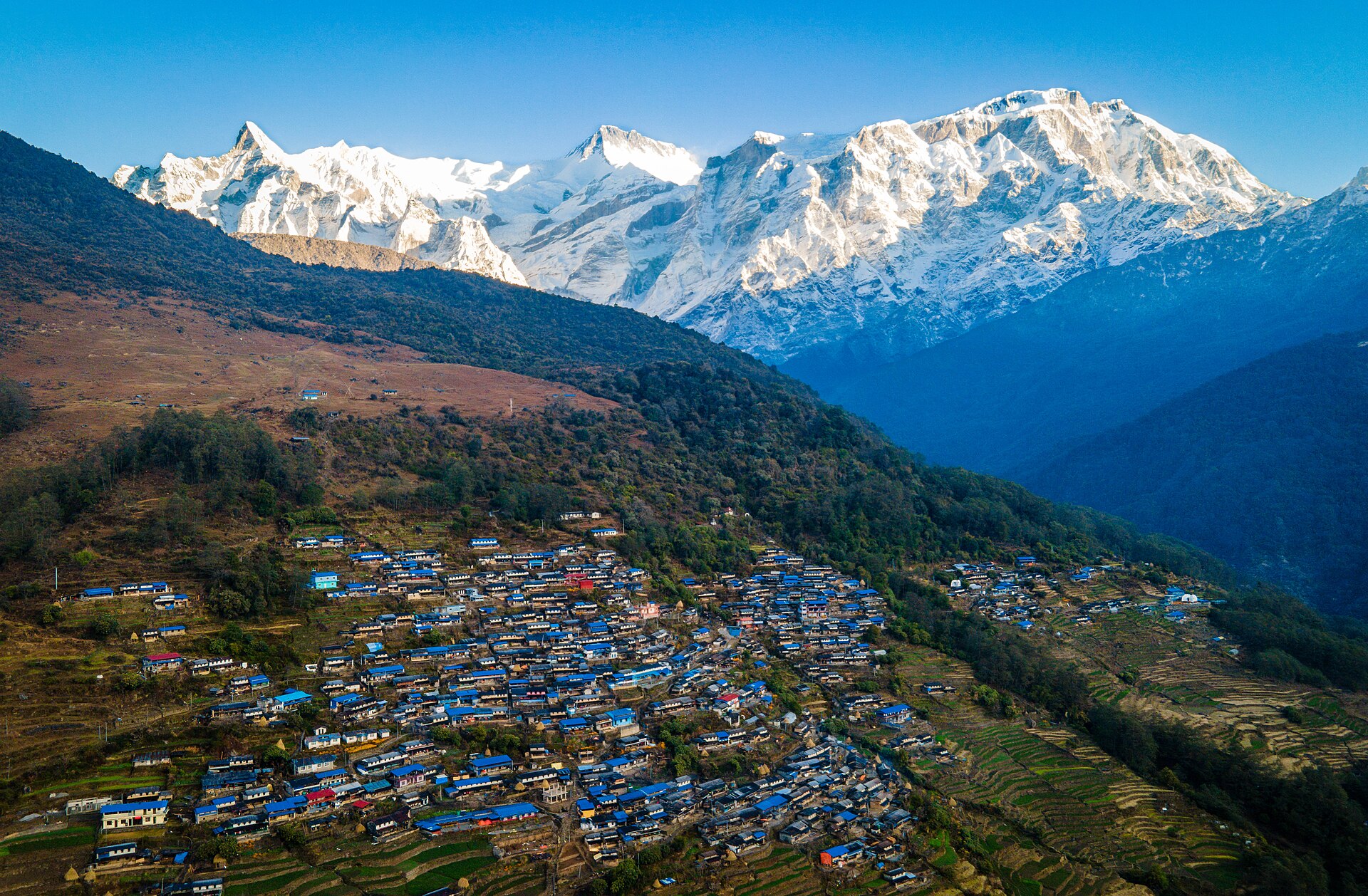
Macfarlane and Indrabahadur Gurung describe terraced agriculture in which rice is grown in lower fields and maize and millet higher up. Terraces turn a steep slope into surfaces that can hold soil and, where suitable, irrigation water. This landscape is built and maintained, not simply a natural backdrop to village life. The authors’ account connects field walls, water management and repeated labour with a household’s ability to produce grain. It describes historically observed villages rather than a current survey of every Gurung farm.
Working with monsoon water
The World of the Gurungs describes preparation of rice fields, sowing in nursery plots and transplanting after water becomes available. In a quoted historical account, channels bring stream water into terraces and excess water passes downward from one level to the next. Repairs to walls and clearing plants that loosen stones are part of cultivation. The timing depends on rain: the text notes that a dry year altered planting work. Its calendar is therefore an example of an agricultural rhythm, not an exact schedule for all altitudes and years.
An illustrative yearly rhythm
The book’s calendar places manure carrying, building and path repair in the quieter early months; maize-field preparation and rice nurseries in spring; rice and millet transplanting around the start of the monsoon; and rice and millet harvest and threshing in the autumn and early winter. May to July are described as especially demanding. This helps explain why household work, festivals and visiting cannot be understood apart from the farming season. Changes in weather, irrigation, labour and crop choice can shift the rhythm.
More than three grain crops
The same account describes lentils, beans and vegetables grown between crops, along terrace embankments and in small gardens. Potatoes can be grown after a main harvest or in higher fields; gardens include vegetables and spices. Intercropping and the use of field edges make small holdings support a wider diet than grain production alone suggests. The book specifically discusses pulses as a source of protein in documented households. These observations are not a complete nutritional survey or a list of foods exclusive to Gurungs.
Animals, manure and people
Crop production connects with animal keeping: manure is carried to fields, fodder is cut for livestock, and returning herds may graze stubble after harvest. Labour is likewise social, with work parties assembled through exchange or payment. A field’s productivity therefore depends on relationships among people, animals, forests and water. Historical accounts help make these connections visible while leaving room for present-day changes caused by migration, wage work, machinery and new livelihoods.
स्रोत र थप पठन
1The World of the Gurungs
Longitudinal ethnographic book and film notes · पृष्ठ-स्तरका दाबीका सन्दर्भ अझै दिइएका छैनन्A Guide to the Gurungs (online draft; differs from published edition)
Ethnographic guide · पृष्ठ-स्तरका दाबीका सन्दर्भ अझै दिइएका छैनन्सम्पदा संवादबाट बढ्छ।
फरक स्थानीय विवरण थाहा छ, वा सुधार्नुपर्ने कुरा भेट्नुभयो?
आफ्नो ज्ञान साझा गर्नुहोस्